

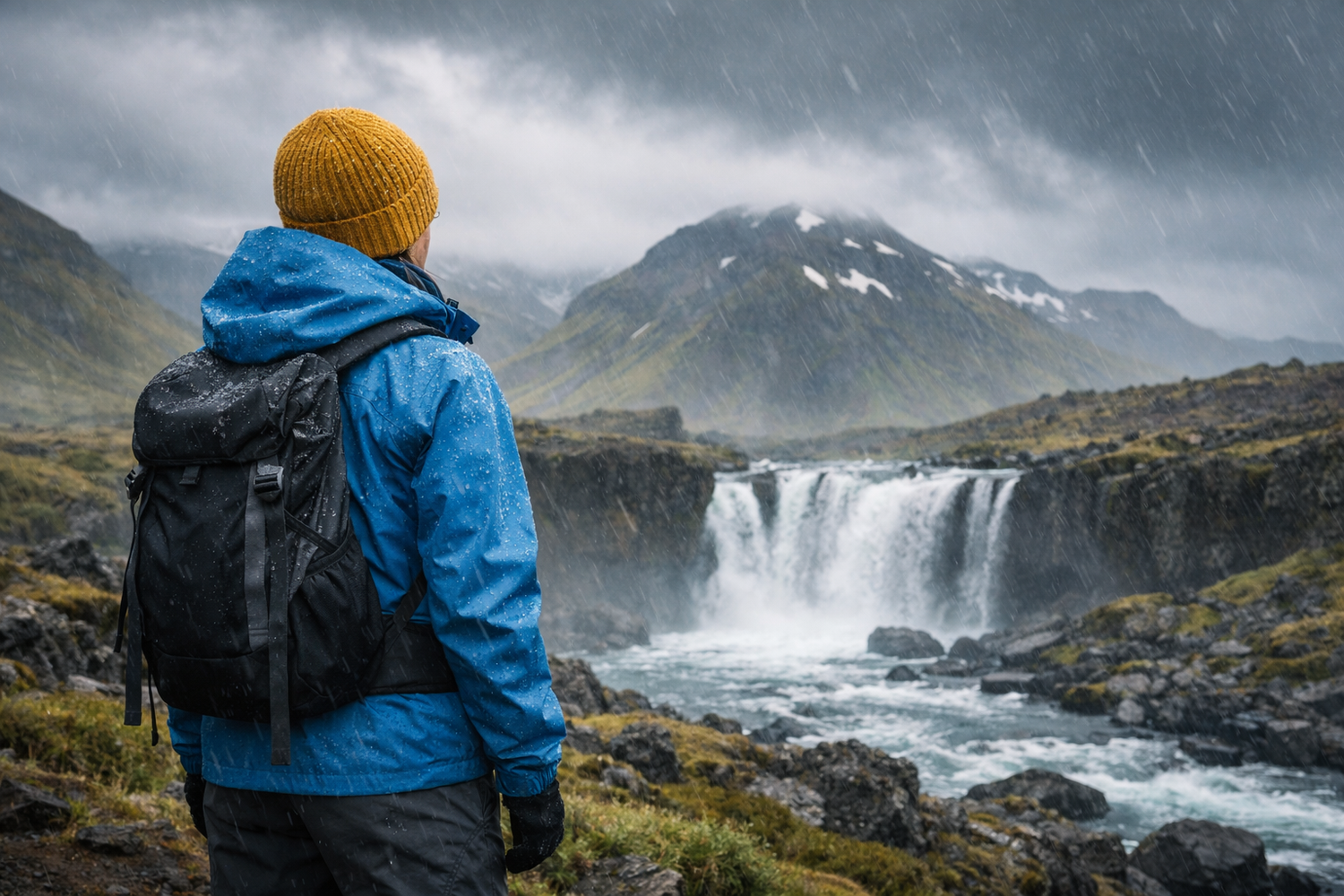
How to Dress in Iceland: Clothing Guide by Month Group

Iceland’s weather follows clear patterns when months are grouped together. This guide explains what to wear in Iceland throughout the year, based on temperature, wind, and precipitation.
❄️ January – February (Deep Winter)
Average temperatures: –5°C to +2°C
Conditions: Snow, ice, strong winds, limited daylight
What to wear:
- Heavy thermal base layers (merino or synthetic)
- Thick fleece or insulated mid-layer
- Waterproof & windproof outer jacket
- Insulated, waterproof pants
- Warm hat, gloves, neck gaiter
- Insulated winter boots with wool sock
🌨️ March – April – May (Late Winter to Spring
Average temperatures: –3°C to +10°C
Conditions: Snow, rain, wind, muddy or icy surfaces
What to wear:
- Thermal or mid-weight base layers
- Fleece or light insulated jacket
- Waterproof shell jacket and pants
- Waterproof footwear
- Hat and gloves (especially in March & April)
Notes: Weather changes fast — layering is essential.
☀️ June – July – August (Summer)
Average temperatures: +7°C to +15°C
Conditions: Long daylight, rain showers, wind, cooler nights
What to wear:
- Breathable base layers
- Light fleece or thin insulated jacket
- Waterproof jacket
- Quick-dry outdoor pants
- Waterproof shoes or light hiking boots
- Cap or sun hat
Reality check: Summer in Iceland is mild, not warm.
🍂 September – October (Autumn Transition)
Average temperatures: +1°C to +10°C
Conditions: Increased rain, strong wind, early frost and snow
What to wear:
- Thermal base layers
- Fleece plus insulated jacket
- Waterproof outer layers
- Warm hat and gloves
- Waterproof boots
❄️ November – December (Early Winter)
Average temperatures: –5°C to +4°C
Conditions: Snow, ice, strong winds, short daylight
What to wear:
- Heavy thermal base layers
- Thick fleece or insulated jacket
- Waterproof & windproof shell
- Insulated pants
- Warm accessories
- Winter boots
Key Clothing Principles for Iceland
- Dress in layers, not bulky single items
- Waterproof and windproof outerwear matter year-round
- Avoid cotton; choose quick-drying fabrics
- Be prepared for sudden weather changes in any season
Rent the gear in Reykjavik
- Outdoor clothing rental — jackets, trousers, gloves and hats
- Hiking shoes
- Lightweight waterproof jacket
- Warm waterproof parka — for winter and the shoulder season


Leave a comment
This site is protected by hCaptcha and the hCaptcha Privacy Policy and Terms of Service apply.