

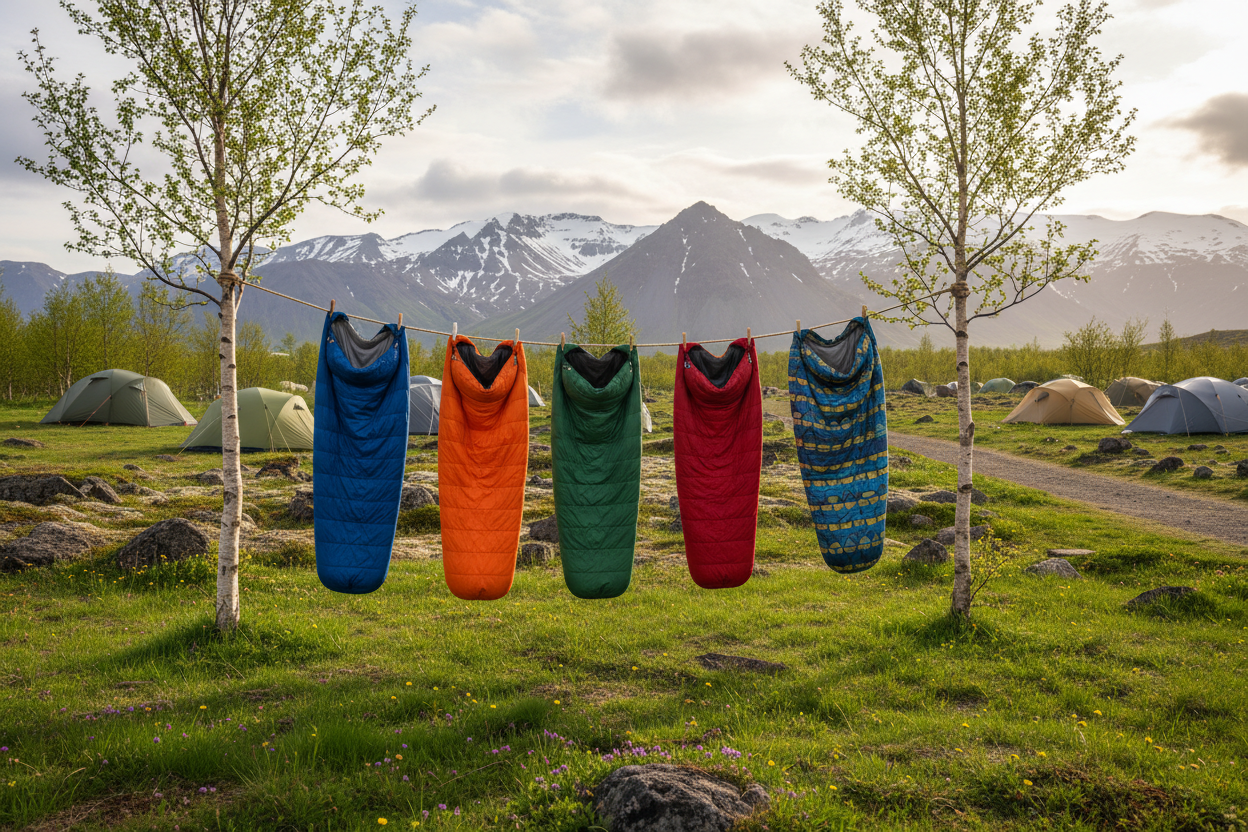
Choosing the right sleeping bag is one of the most important decisions you'll make for an Iceland camping trip. Get it wrong and you'll spend the night shivering — or sweating. This guide explains sleeping bag temperature ratings, what they mean in practice, and exactly which rating you need for camping in Iceland across different seasons and locations.
How Sleeping Bag Temperature Ratings Work
Sleeping bags sold in Europe are rated using the EN 13537 / ISO 23537 standard, which provides three key temperature figures:
- Comfort rating: The temperature at which a standard woman can sleep comfortably in a relaxed position. This is the most conservative (warmest) rating.
- Lower limit (transition) rating: The temperature at which a standard man can sleep for 8 hours in a curled position without waking from cold.
- Extreme rating: The survival limit — the minimum temperature at which a standard woman can survive for 6 hours without risk of death from hypothermia. Do not use this as a comfort guide.
Rule of thumb: Always choose a bag based on the comfort rating, not the lower limit. Most people sleep colder than the "standard" test subject, especially when tired or dehydrated after a long hiking day.
What Temperatures Should You Expect in Iceland?
Iceland's summer temperatures are mild but can drop significantly at night, especially in the highlands:
| Location / Month | Daytime High | Night Low |
|---|---|---|
| Reykjavik, June–August | 12–18°C | 6–10°C |
| South Coast, June–August | 10–15°C | 4–8°C |
| Highlands (Landmannalaugar), July–August | 8–14°C | 0–5°C |
| Highlands, June or September | 5–10°C | -2 to 3°C |
| Anywhere, May or October | 4–8°C | -3 to 2°C |
Wind chill is a major factor in Iceland. A 10°C night with 30 km/h winds can feel like 2–3°C. Always factor in wind when choosing your bag.
Which Sleeping Bag Rating Do You Need for Iceland?
Summer Camping (June–August) — Lowland & Ring Road
For camping at standard campsites along the Ring Road or south coast in peak summer, a bag with a comfort rating of +5°C to 0°C is sufficient for most people. A 3-season bag works well here.
Highland Camping (Landmannalaugar, Þórsmörk, Kerlingarfjöll)
Highland campsites sit at higher elevation and experience colder, windier nights. You need a bag with a comfort rating of 0°C to -5°C. Don't underestimate this — even in July, highland nights can drop to near freezing.
Shoulder Season (May or September)
Temperatures drop significantly in May and September. A bag rated to -5°C comfort is recommended, and you should pair it with a quality sleeping mat (R-value 3+) to prevent cold from seeping up from the ground.
Cold Weather / Winter Camping (October–April)
Winter camping in Iceland is for experienced adventurers only. You'll need a bag rated to -10°C to -20°C comfort depending on conditions, combined with a 4-season tent and full cold-weather layering system.
Down vs Synthetic Sleeping Bags for Iceland
This is an important choice for Iceland specifically, because of the wet and unpredictable weather:
Down Sleeping Bags
- Pros: Lighter, more compressible, warmer for their weight, longer lifespan
- Cons: Loses insulating power when wet; takes longer to dry
- Best for: Dry highland conditions, experienced campers who keep their gear dry
- Verdict for Iceland: Good if you use a dry bag and keep it away from moisture. Look for hydrophobic down (treated to resist moisture) for added safety.
Synthetic Sleeping Bags
- Pros: Retains warmth even when damp, dries faster, cheaper
- Cons: Heavier and bulkier than down for the same warmth
- Best for: Wet coastal camping, beginners, those camping in unpredictable conditions
- Verdict for Iceland: Excellent choice for most Iceland campers, especially along the coast and Ring Road where rain is common.
Sleeping Bag Tips for Iceland
- Always use a sleeping mat: Up to 30% of body heat is lost through the ground. A mat with an R-value of 3–4 is recommended for Iceland summer camping; R-value 4–5 for highlands or shoulder season.
- Wear a base layer: Sleeping in a thermal base layer can add 3–5°C of effective warmth to any bag.
- Keep your bag dry: Store it in a dry bag inside your pack. Never leave it in a damp tent vestibule overnight.
- Air it out daily: Iceland's humidity means bags can accumulate moisture. Air your bag out during the day whenever possible.
- Use a sleeping bag liner: A silk or fleece liner adds 3–8°C of warmth and keeps your bag cleaner on longer trips.
Quick Reference: Iceland Sleeping Bag Guide
| Camping Scenario | Recommended Comfort Rating | Fill Type |
|---|---|---|
| Ring Road, June–August | +5°C to 0°C | Synthetic or Down |
| South Coast, June–August | 0°C | Synthetic preferred |
| Highlands, July–August | 0°C to -5°C | Hydrophobic Down or Synthetic |
| Highlands, June or September | -5°C | Hydrophobic Down or Synthetic |
| May or October | -5°C to -10°C | Synthetic or Down |
| Winter camping | -15°C to -20°C | High-loft Down |
Rent a Sleeping Bag for Your Iceland Trip
Not sure which bag to choose, or don't want to travel with bulky gear? Rent a sleeping bag from Iceland Camping Equipment. We provide high-quality, properly rated sleeping bags for Iceland conditions — cleaned, inspected, and ready for your adventure. Renting saves you money, luggage weight, and the stress of choosing the wrong bag.
What to rent for this
- Synthetic sleeping bag + liner — our standard bag for Icelandic summer
- Down sleeping bag + liner — for May, September and the highlands
- Indoor sleeping bag — for sleeping-bag accommodation
- Self-inflating mat 5 cm — insulation matters more than cushioning here
Frequently Asked Questions
What sleeping bag do I need for Iceland in July?
For most lowland and Ring Road camping in July, a bag with a comfort rating of 0°C is ideal. If you're heading to the highlands (Landmannalaugar, Þórsmörk), go for -5°C comfort to be safe.
Is a 3-season sleeping bag enough for Iceland?
A good 3-season bag (rated to 0°C comfort) is sufficient for summer camping in Iceland's lowlands. For highland camping or shoulder season, you'll want a warmer bag rated to -5°C.
Can I use a summer sleeping bag in Iceland?
A summer bag (comfort rating +10°C or higher) is not recommended for Iceland, even in peak summer. Nights are cold and wind chill can make temperatures feel much lower than the thermometer reads.
Should I bring a sleeping bag liner to Iceland?
Yes — a liner is a great addition. It adds warmth, keeps your bag cleaner on multi-day trips, and is lightweight and easy to pack.


Leave a comment
This site is protected by hCaptcha and the hCaptcha Privacy Policy and Terms of Service apply.