

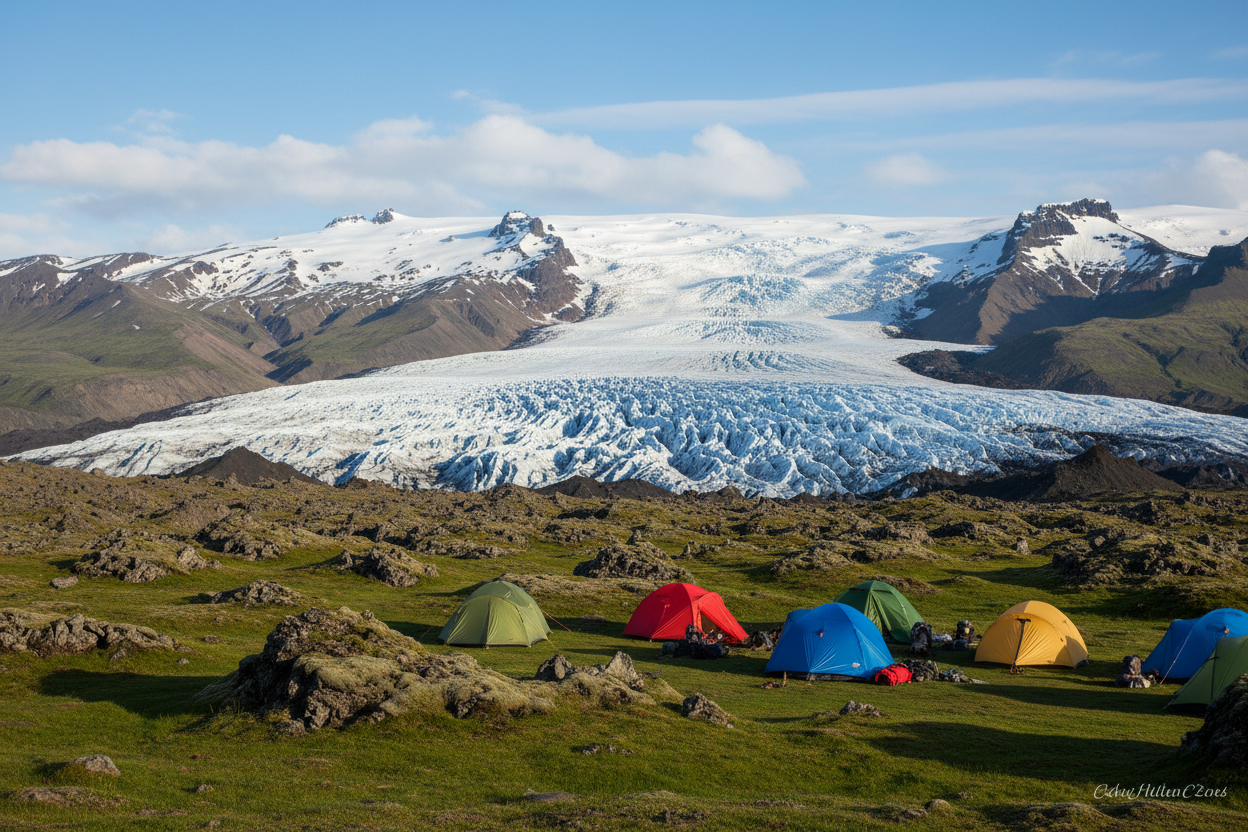
Iceland's landscapes are breathtaking — and fragile. The country has strict camping regulations designed to protect its unique environment and ensure a positive experience for all visitors. Whether you're planning a Ring Road road trip or a highland trek, understanding Iceland's camping rules before you arrive will save you from fines, damaged ecosystems, and awkward encounters with rangers.
The Golden Rule: Use Designated Campsites
The most important rule in Iceland is simple: camp at designated campsites. Wild camping — pitching your tent wherever you like — is not permitted in most of Iceland. This rule was significantly tightened in recent years due to environmental damage caused by unregulated camping.
Iceland has an excellent network of over 170 registered campsites across the country, ranging from basic highland sites to well-equipped facilities with showers, kitchens, and electricity. There is almost always a designated campsite within reasonable distance of wherever you want to explore.
Where Is Wild Camping Allowed?
Wild camping is only permitted in uninhabited areas that are not covered by the regulations of national parks, nature reserves, or private land. In practice, this means:
- Allowed: Remote, uninhabited highland areas far from roads, farms, and designated sites — and only for one or two nights in the same spot.
- Not allowed: Within 200 metres of a designated campsite, on private farmland without permission, in national parks, in nature reserves, or anywhere near roads and tourist sites.
- Always check: If you're unsure whether an area permits wild camping, assume it doesn't and find a designated site.
National Park Rules
Iceland's national parks — Vatnajökull, Þingvellir, and Snæfellsjökull — have their own strict regulations:
- Camping is only permitted at designated campsites within national parks. No exceptions.
- Drones require a special permit in national parks.
- Off-road driving is strictly prohibited — this includes driving on moss, grass, or any surface off marked roads and tracks.
- Collecting rocks, plants, or any natural materials is prohibited.
- Dogs must be kept on a lead at all times in national parks.
Campfire Rules
Campfires are generally prohibited in Iceland. Open fires pose a serious risk to Iceland's fragile vegetation, particularly the slow-growing moss that covers much of the landscape. A patch of moss destroyed by a campfire can take 50–100 years to recover.
- Use a camp stove for all cooking.
- Some campsites have designated fire pits — fires are only permitted in these areas.
- Never light a fire on moss, grass, or near vegetation.
- Check local conditions and any fire bans before lighting any fire.
Leave No Trace Principles
Iceland follows strict Leave No Trace principles. These are not just guidelines — violations can result in fines:
- Pack out all waste: Take all rubbish with you. Many highland campsites have limited waste facilities.
- Human waste: Use campsite toilets where available. In remote areas, bury waste at least 70 metres from water sources, trails, and campsites, and pack out toilet paper.
- Stay on marked paths: Iceland's vegetation is extremely fragile. Walking off marked trails causes lasting damage. This is especially important in highland areas.
- No washing in natural water sources: Use campsite facilities for washing. Soap and detergents — even biodegradable ones — can harm Iceland's pristine water systems.
- Respect wildlife: Keep a safe distance from birds (especially nesting Arctic terns and puffins), seals, and other wildlife. Do not feed animals.
Private Land Rules
A significant portion of Iceland's land is privately owned farmland. The rules are clear:
- Always ask permission before camping on private land. Most Icelandic farmers are friendly and may grant permission, but you must ask first.
- Crossing private land to access a campsite or hiking trail is generally permitted, but stay on paths and close any gates behind you.
- Never camp in fields with livestock.
Off-Road Driving Rules
This is one of Iceland's most strictly enforced environmental laws. Off-road driving is illegal throughout Iceland — not just in national parks. Driving on moss, grass, sand, or any surface outside of marked roads and F-roads is a criminal offence that can result in fines of up to 500,000 ISK (€3,300+).
- Only drive on marked roads and tracks.
- F-roads (highland roads) require a 4WD vehicle — driving a 2WD on an F-road is illegal and dangerous.
- River crossings on F-roads should only be attempted in a suitable 4WD with experience. When in doubt, wait for another vehicle or turn back.
Campsite Etiquette
Beyond the legal rules, good campsite etiquette makes the experience better for everyone:
- Quiet hours: Most Icelandic campsites observe quiet hours from 11 PM to 7 AM. Respect this even during the midnight sun — other campers may be trying to sleep.
- Pitch in designated areas: Don't pitch your tent on grass or vegetation outside the marked camping area.
- Shower and kitchen facilities: Clean up after yourself. These shared facilities are a privilege, not a right.
- Pets: Dogs are welcome at many campsites but must be kept on a lead. Always clean up after your dog.
Camping Season
The official camping season in Iceland runs from June 1st to September 15th, when most registered campsites are open. Some campsites open earlier (mid-May) or close later (end of September). Highland campsites typically open later — usually late June — depending on snow conditions.
Camping outside of the official season is possible at some year-round sites, but facilities are limited and weather conditions are significantly more challenging.
Useful Resources
- Weather forecast: vedur.is — check before every trip into the highlands
- Road conditions: road.is — essential for F-road access information
- Safe Travel Iceland: safetravel.is — register your itinerary for safety
- Campsite finder: nat.is — Iceland's official campsite directory
Gear for this trip
- Tent rental
- Camping stoves and gas — open fires are rarely permitted, so a stove is essential
- All rental gear
Frequently Asked Questions
Can I camp anywhere in Iceland?
No. Wild camping is restricted in Iceland. You must use designated campsites in most areas. Wild camping is only permitted in remote, uninhabited highland areas away from roads, farms, national parks, and nature reserves.
What is the fine for illegal camping in Iceland?
Fines for illegal camping vary but can be substantial — typically starting at 50,000 ISK (€330+) and increasing for repeat offences or environmental damage. Off-road driving fines can reach 500,000 ISK (€3,300+).
Can I have a campfire in Iceland?
Generally no. Open fires are prohibited in most of Iceland due to the risk of damage to fragile vegetation. Use a camp stove for cooking. Some campsites have designated fire pits where fires are permitted.
Do I need to book campsites in advance in Iceland?
For popular sites like Landmannalaugar and Þórsmörk in July and August, advance booking is strongly recommended. Most Ring Road campsites operate on a first-come, first-served basis, but can fill up in peak season.
Are dogs allowed at Icelandic campsites?
Many campsites allow dogs, but they must be kept on a lead at all times. Dogs are not permitted in national parks. Always check the specific campsite's pet policy before arriving.


Leave a comment
This site is protected by hCaptcha and the hCaptcha Privacy Policy and Terms of Service apply.