

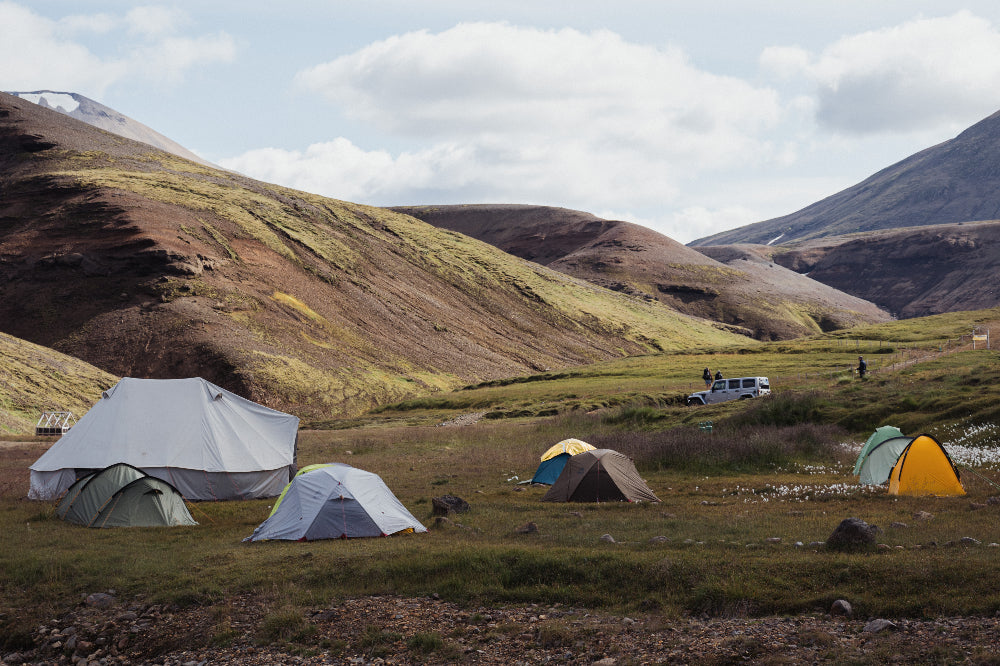
Two of the most common questions we hear from visitors planning an Iceland camping trip are: "Is May too early?" and "Is August too crowded?" The honest answer is that both months offer a great experience — but they're very different trips. This guide compares May and August across every dimension that matters for campers.
The Short Answer
- Choose May if: You want fewer crowds, lower prices, long daylight hours, and don't need highland access.
- Choose August if: You want the warmest weather, all campsites and F-roads open, and the full Iceland experience with maximum accessibility.
Weather: May vs August
May
May weather in Iceland is variable and unpredictable. You can experience sunshine, rain, snow, and wind all in the same day — sometimes within the same hour. Average daytime temperatures range from 4°C to 10°C, with nights dropping to 0°C to 4°C. Snow is still possible, especially in the north and at higher elevations. Wind can be strong.
What this means for camping: You need a robust 3–4 season tent and a sleeping bag rated to at least -5°C. Waterproof layers are essential every day. Be prepared for your plans to change due to weather.
August
August is Iceland's warmest month. Daytime temperatures average 10°C to 15°C, occasionally reaching 18°C in sheltered areas. Nights cool to 5°C to 9°C. Rain is still common — Iceland is never truly dry — but prolonged storms are less frequent than in spring. Wind remains a factor, particularly in exposed coastal and highland areas.
What this means for camping: A good 3-season tent is sufficient for most locations. A sleeping bag rated to 0°C is the minimum; -5°C for highland camping. Waterproofs are still essential.
Daylight: May vs August
May
May offers 17–20 hours of daylight, increasing rapidly through the month. By late May, it barely gets dark at all — you'll have a brief twilight around midnight rather than true darkness. This is fantastic for hiking and sightseeing but can disrupt sleep. Bring a good sleep mask.
August
Early August still has very long days — around 18–20 hours of daylight. By late August, nights start to get noticeably darker, and from around August 20th onwards, you may catch your first glimpse of the Northern Lights if skies are clear. Daylight decreases quickly through the month.
Crowds and Prices: May vs August
May
May is significantly quieter than the summer peak. Tourist numbers are a fraction of July–August levels. Popular sites like the Golden Circle, South Coast waterfalls, and Reykjavik are noticeably less crowded. Campsite fees and accommodation prices are lower. You'll often have campsites largely to yourself.
August
August is peak season. Iceland receives its highest tourist numbers in July and August. Popular campsites — especially Landmannalaugar, Þórsmörk, and Skaftafell — fill up fast and must be booked well in advance. Prices are at their highest. The Ring Road is busy with campervans and rental cars.
Campsite and F-Road Access: May vs August
May
Many lowland campsites open in May, but the official season doesn't start until June 1st. Some sites open earlier, but facilities may be limited. Highland F-roads are closed in May — this means no access to Landmannalaugar, Þórsmörk, Kerlingarfjöll, or other highland destinations. The Ring Road and all paved roads are fully accessible.
August
All campsites are open and fully operational. All F-roads are open (subject to weather and road conditions). Every corner of Iceland is accessible. This is the month with maximum flexibility for your itinerary.
Wildlife and Nature: May vs August
May
- Puffins arrive in Iceland in May — excellent birdwatching from mid-May onwards
- Landscape is fresh and green after winter
- Wildflowers beginning to bloom
- Waterfalls at their most powerful from snowmelt
- Fewer midges (the small flies that plague Mývatn in summer)
August
- Puffins still present until late August before migrating
- Wildflowers in full bloom, highland trails at their best
- Blueberries and crowberries ripe for picking in the highlands
- Midges at their worst near Mývatn (bring a head net)
- First hints of autumn colour appearing by late August
Side-by-Side Comparison
| Factor | May | August |
|---|---|---|
| Avg. daytime temp | 4–10°C | 10–15°C |
| Avg. night temp | 0–4°C | 5–9°C |
| Daylight hours | 17–20 hrs | 16–20 hrs |
| Midnight sun | Near-midnight sun | Early Aug only |
| Northern Lights | No (too bright) | Late Aug possible |
| Crowds | Low | Very high |
| Prices | Lower | Peak |
| F-roads open | No | Yes |
| All campsites open | No (from June 1st) | Yes |
| Sleeping bag needed | -5°C comfort | 0°C comfort |
| Tent needed | 3–4 season | 3 season |
| Puffins | Yes (from mid-May) | Yes (until late Aug) |
Our Recommendation
For first-time Iceland campers: Choose August. Everything is open, the weather is most forgiving, and you'll have the full Iceland experience without needing to worry about road closures or cold nights.
For experienced campers or repeat visitors: May is a hidden gem. The solitude, lower prices, powerful waterfalls, and fresh landscapes make it a special time to visit — as long as you have the right gear and flexibility for variable weather.
Whichever month you choose, rent your camping gear from Iceland Camping Equipment — we'll make sure you have the right kit for your travel dates, whether that's a -5°C sleeping bag for a May trip or a lightweight setup for August.
What to rent for this
- Down sleeping bag — what we recommend for May
- Synthetic sleeping bag — enough for August
- Fleece blanket
Frequently Asked Questions
Is May a good time to visit Iceland for camping?
Yes, for experienced campers. May offers long daylight hours, low crowds, and lower prices. The trade-offs are colder nights, variable weather, and no access to highland F-roads. Bring a sleeping bag rated to -5°C and a 3–4 season tent.
Is August too crowded in Iceland?
August is Iceland's busiest month, but it's busy for good reason — the weather is at its best and everything is accessible. Book campsites and rental gear well in advance (at least 4–6 weeks ahead for popular sites) and you'll have a fantastic trip.
Which month is cheaper for camping in Iceland, May or August?
May is noticeably cheaper. Campsite fees, rental car prices, and accommodation costs are all lower in May than in peak August. If budget is a priority, May (or September) offers the best value.
Can you see the Northern Lights in May or August in Iceland?
No — not in May or most of August. The midnight sun means skies never get dark enough for Northern Lights viewing. From late August (around August 20th onwards), skies start to darken and Northern Lights become possible on clear nights.


Leave a comment
This site is protected by hCaptcha and the hCaptcha Privacy Policy and Terms of Service apply.